


It’s a fair question.
Your check engine light comes on, your vehicle starts making a noise, or something just isn’t working correctly. You bring it in and hear there’s a diagnostic charge.
Wait. I’m paying you just to tell me what’s wrong?
Generally, when a vehicle is outside of factory warranty, yes, and there’s a lot more involved in automotive diagnosis than most people realize.
We Don’t Just Plug It In
Let’s get this one out of the way.
There is no magical Ford machine that we plug into your vehicle that says:
“Hello! Your left rear whatchamacallit has failed. Replace it and have a wonderful day.”
We wish.
A diagnostic scan may give a technician a trouble code, but that code usually tells us where to begin testing, not which part to replace.
From there, a trained technician may need to follow Ford diagnostic procedures, perform electrical tests, take measurements, inspect components, review data while the vehicle is operating and eliminate possible causes until the actual failure is identified.
The magic Ford diagnostic fairy would be significantly faster.
Unfortunately, she’s apparently on backorder.
You’re Paying for Time, Tools and Education
Modern vehicles are basically rolling computers surrounded by mechanical components.
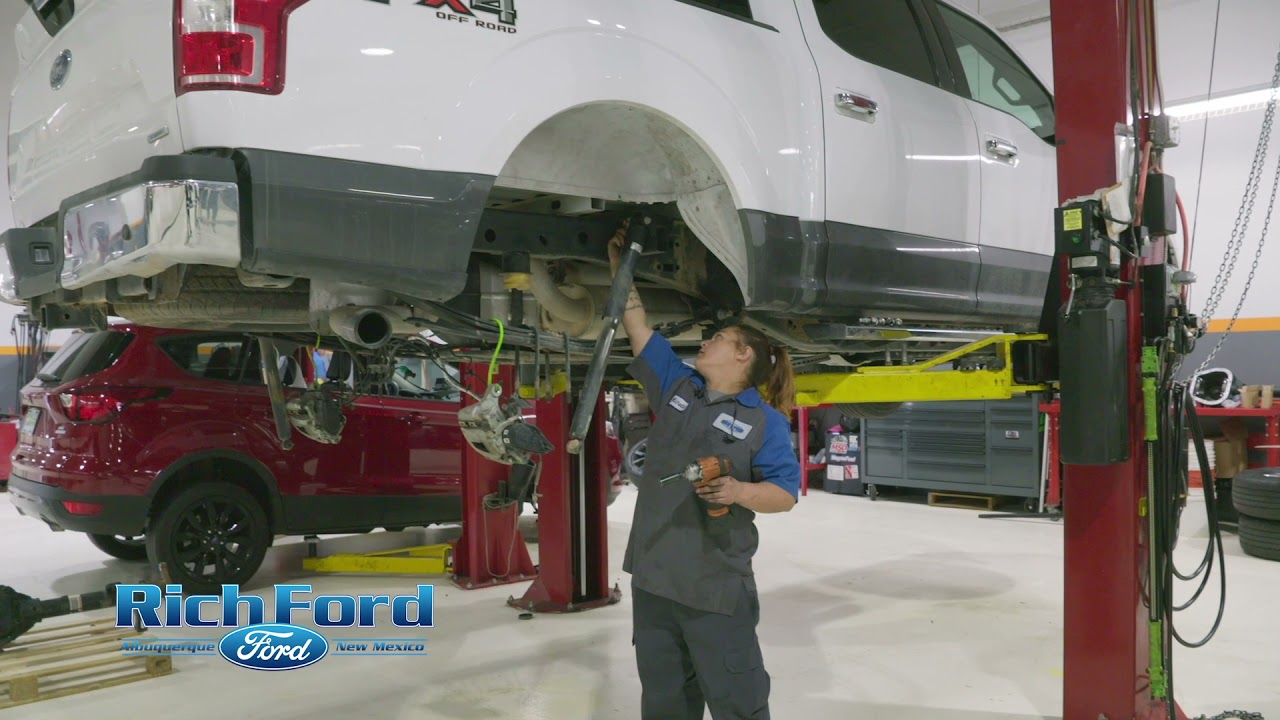
Our technicians spend years training and continuing their education as vehicle technology changes. They also use specialized diagnostic equipment, software, tools and information systems that allow them to accurately test today’s vehicles.
At Rich Ford’s Albuquerque location alone, we have 72 service bays and more than 69 lifts, along with alignment racks, tire equipment and specialized tools and equipment designed for specific repairs and diagnostic concerns.
All of that exists so we can do more than guess.
Because guessing gets expensive very quickly when you’re replacing parts that weren’t actually broken.
“It Only Does It Sometimes.”
Ahhh, our favorite.
Some problems happen every single time you start the vehicle.
Others only happen at 47 mph, going slightly uphill, after the vehicle has been driven for 23 minutes, when it’s 38 degrees outside and apparently Mercury is in retrograde.
Those concerns may require extensive test drives or repeated testing before we can duplicate the problem.
Sometimes the vehicle behaves perfectly for us.
We promise we’re not questioning your sanity.
Vehicles apparently just know when they’ve arrived at the dealership and decide to be on their best behavior.
The technician still has to spend the time necessary to duplicate the concern, gather information and determine what’s causing it.
What If I Have an Extended Warranty?
This is another common source of confusion.
Having an extended service contract doesn’t automatically mean diagnosis is free.
In many cases, the warranty company won’t approve or deny coverage until we’ve identified the cause of failure.
That means we first have to diagnose what’s wrong.
Until the failure is identified and the warranty company determines whether it’s a covered component or repair, the diagnostic charge is generally considered the customer’s responsibility.
If the repair is covered, your service advisor can then explain what the warranty company has authorized and what costs, such as a deductible or non-covered items, may remain.
Diagnosis Isn’t Just Finding a Code
When you pay for automotive diagnosis, you’re paying for a trained technician to find the cause of the problem, not simply read the symptom.
Sometimes that’s quick.
Sometimes it requires testing circuits, removing components, researching information, analyzing data or driving your vehicle repeatedly until it finally decides to make that noise you’ve been telling us about for three weeks.
The goal is the same:
Find the actual problem before we start throwing your money at parts.
And until Ford finally sends us that magic diagnostic fairy, we’ll keep doing it the old-fashioned way, with trained technicians, specialized equipment and a whole lot of testing.
Rich Ford Service – Albuquerque, New Mexico
Our Ford-trained technicians have the equipment, training and experience to diagnose today’s increasingly complex vehicles and help you understand what your vehicle needs and why.


